
Jeena means “to live” in Urdu. For us, living is not simply surviving or meeting external expectations. It is about having the space and support to notice what you feel, set boundaries, challenge oppressive standards, and move toward the relationships and communities that feel right for you.
Jeena was created to bring together psychotherapy, families, schools, and community partners in a way that is ethical, non‑hierarchical, and grounded in social justice. We are committed to making spaces where people can explore their experiences with respect and curiosity, without being shamed or pathologized for who they are.
Jeena believes in empowerment which honours advocating for one’s self. Knowing how to be assertive, set boundaries, be aware of oppressive standards in society, and learn how to prioritise safety.


The Ethics
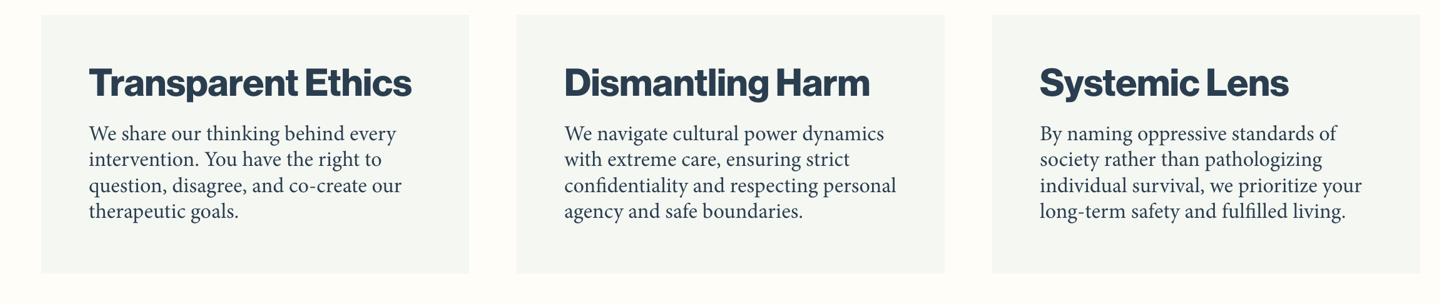
In common therapeutic settings, a dynamic of power often exists where the practitioner is the expert and the client is a subject to be fixed. At Jeena, we challenge this hierarchy. We see therapy as a non-hierarchical collaboration where you are the expert on your own life, your context, and your narrative. Our role is to stand beside you, offering clinical tools as partners in the process of your growth.
We actively address the systems of oppression that shape our mental health. Therapy should not teach you to better tolerate injustice; it should support you to navigate your reality with dignity. In the context of Pakistan especially, we are transparent about our ethics to prevent common harms such as shaming, gaslighting, or value imposition.

How therapy can be harmful or unethical
Misuse of power: therapists who exert undue control, coerce decisions, or take advantage of clients can cause psychological harm and retraumatization.
Shaming, minimizing concerns and value imposition: imposing the clinician’s values, shaming, or pathologizing differences undermines dignity and trust.
Breaches of confidentiality: inappropriate disclosure of client information damages safety and therapeutic alliance and can have legal/social consequences.
Ignoring oppression and context: failing to recognize clients’ cultural, gender, racial, socioeconomic, or political realities (e.g., systemic oppression) can lead to invalidation, misdiagnosis, or harmful recommendations.
How Jeena works to prevent harm
By Being transparent about limits and expectations: clear informed consent, boundaries, limits to confidentiality, treatment goals, and fees so clients know what to expect.
Clients are experts on their own lives: Jeena centers clients’ perspectives, preferences, and goals rather than assuming expertise over their lived experience.
Trauma‑informed, strength‑based, intersectional, systems‑oriented: care recognizes trauma effects, builds on client strengths, attends to intersecting identities (race, gender, class, religion), and situates individual distress within social and structural systems.
Non‑hierarchical stance; clients can question and give feedback: Jeena encourages mutual respect, routine solicitations of client feedback, and processes for addressing concerns or complaints to reduce power imbalances and correct course if they occur.